Research
-
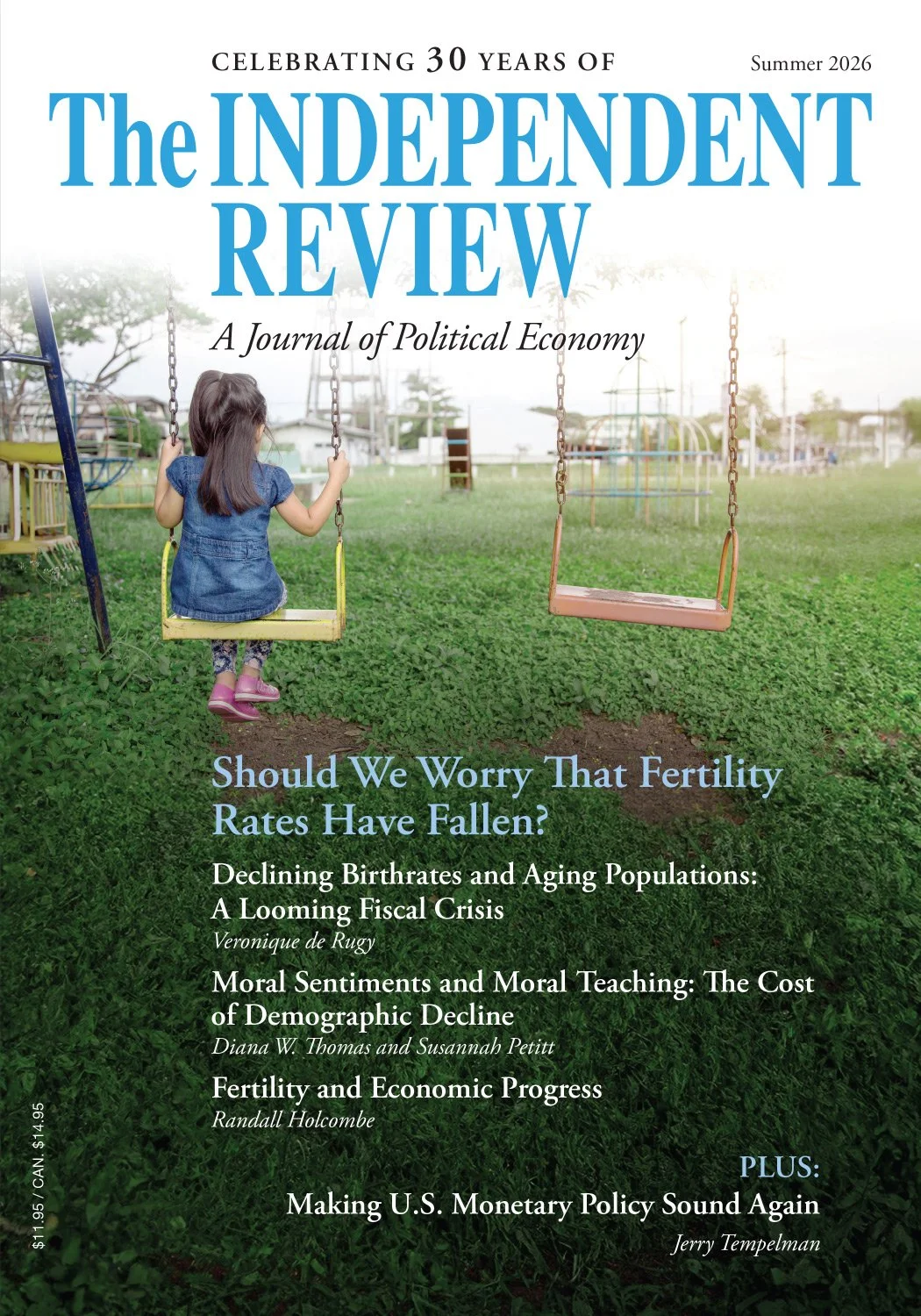
Moral Sentiments and Moral Teaching: The Cost of Demographic Decline (with Susannah Petitt)
The effects of demographic decline are often framed in purely economic terms, such as reduced gross domestic product (GDP) growth, pension funding pressures, and a shrinking labor force. Here, we explore the moral and spiritual dimensions of demographic decline, drawing on both Adam Smith’s Theory of Moral Sentiments and Christian moral and social teaching. Low fertility, aging populations, and the resulting reduction in the number of close-kin relationships per person erode the conditions necessary for the moral formation underlying cooperation, collective action, and the advanced division of labor. Smith’s account of sympathy, cultivated through intimate and repeated social relationships, especially within families, suggests that having fewer opportunities for empathetic identification can subvert the moral development necessary for market exchange. Christian moral and social teaching, as articulated in twentieth-century papal encyclicals, similarly emphasizes the family as the primary school of love, justice, and communion. Demographic decline, from both perspectives, threatens economic development and the cultural orientation toward self-gift, sacrifice, and hope. A recovery of family life and community is essential in response to the demographic decline, which is more than a technical crisis.
-
Behavioral symmetry with humanomics: public choice and moral community
The humanomics model of human behavior suggests that individuals act not merely to maximize narrow conceptions of their own self-interest but instead are motivated by fellow feeling and a desire to act in a praiseworthy way. Because they learn what is praise- and blameworthy from face-to-face exchanges in moral communities to which they belong, the same conceptions and norms carry into impersonal exchanges in the extended market order. Humanomics offers a framework that can reconcile conflicting results from laboratory experiments involving personal and impersonal exchanges. In this paper, we seek to apply the humanomics lens to human action in politics. Public choice scholarship applies assumptions from economics to explain human action in the political sphere. But just like traditional economics models, several puzzles remain unexplained. We argue that a humanomics perspective offers a framework for explaining existing public choice puzzles just as it does for puzzles in economics more broadly.
-
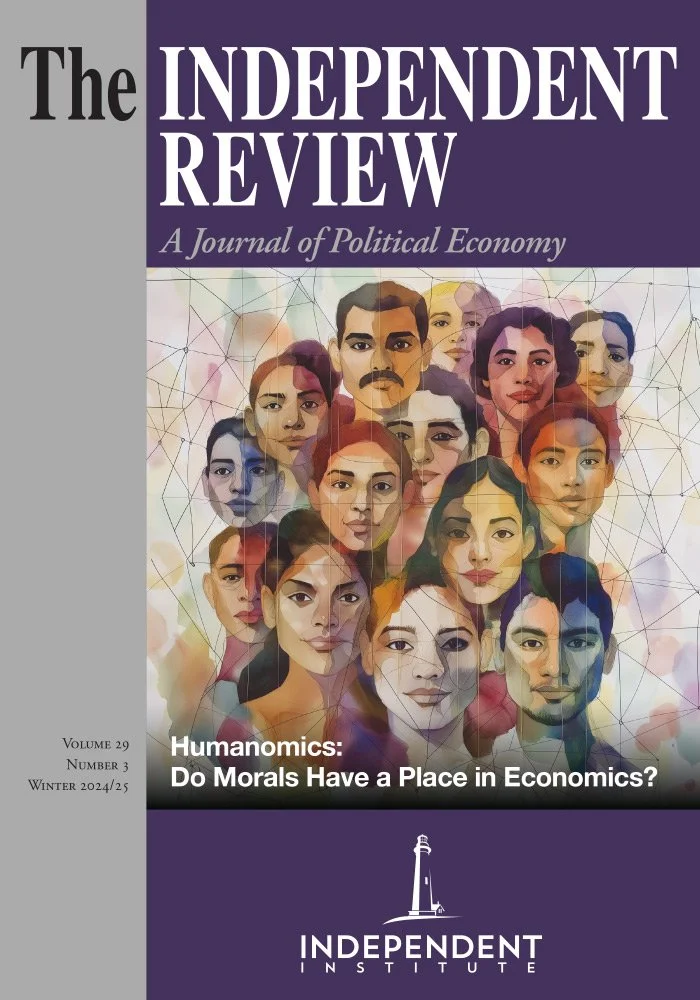
Applied Humanomics: Introduction to the Symposium
Using insights from Adam Smith’s Theory of Moral Sentiments, Vernon Smith and Bart Wilson’s 2019 book Humanomics introduced a model of human behavior that reconciles laboratory findings of self-interested behavior in market-like settings with high levels of trust and cooperation in personal, social-exchange games. This symposium brings together four contributions that apply the humanomics model to an array of issues.
-
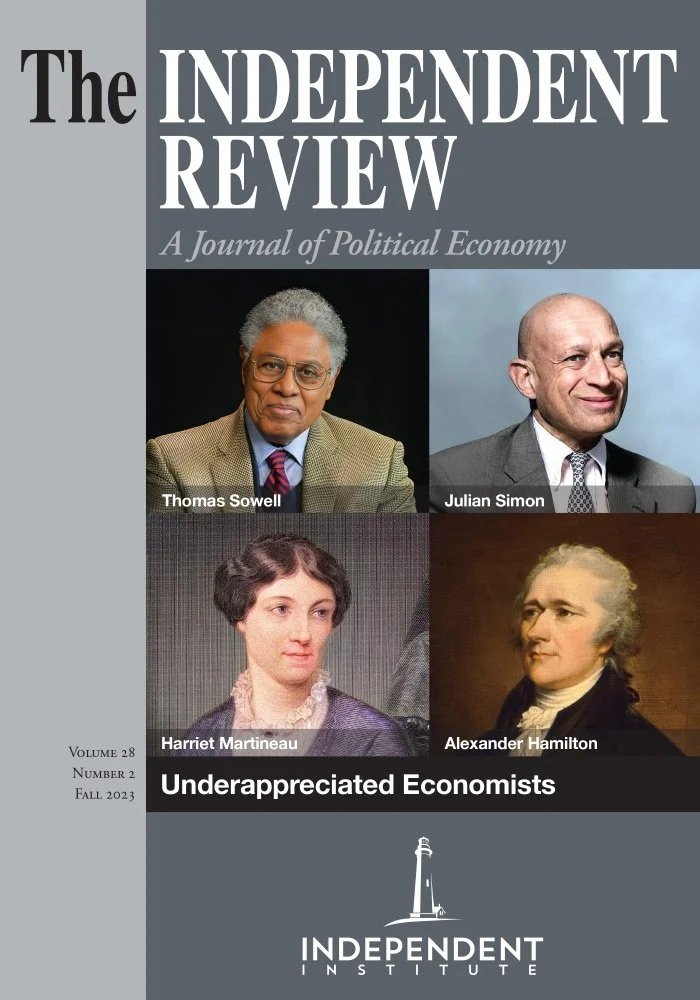
A Consistent Marginalist: Knut Wicksell
Knut Wicksell’s underappreciated contributions to economics spanned productivity theory, monetary economics, and public economics. Across all of his contributions, he faithfully applied the principle of value and countervalue—the equimarginal principle—which was inspired by his belief that a system based on this principle would produce economically just outcomes in the sense that “each man received his money’s worth.”
-
George Stigler"s Theory of Economic Regulation at 50 - Introduction to a Special Issue
DSince its publication in 1971, George J. Stigler’s “Theory of Economic Regulation” (1971), secured its place as the dominant theory of the causes and consequences of regulation in economics. The article was cited by the economic Nobel prize committee as one of the reasons Stigler received the prize in 1982. In his article, Stigler (1971) frames the conversation regarding the “Theory of Economic Regulation” around an analysis of the political demand for and supply of regulation. Following the 50th anniversary of the 1971 paper, the contributors to this special issue evaluate the impact of his “Theory of Economic Regulation”, apply it to other policy questions, and summarize the literature produced in response to his original insight.
-
Regulation, Competition, and the Social Control of Business (2022)
In George Stigler’s (1971) economic theory of regulation, the primary motive of regulatory intervention is the promotion of private interests. More recently, Andrei Shleifer (2010, 2012) has proposed an alternative to Stigler’s theory. Shleifer’s new theory of regulation holds that the rise of regulatory institutions over the course of the 20th century is in fact efficient and providing the requisite social control of business. Contrary to Shleifer, we argue here the comparative efficiency of an institutional solution depends more on its institutional features (centralized/decentralized, contested/uncontested) than its form (regulation, courts, or private orderings).

-
The Impact of the Coronavirus Pandemic on the Market for Childcare (2022)
This paper assesses the short-term consequences of the COVID-19 pandemic on the market for childcare and speculates about potential long-term consequences of pandemic-related policy intervention.

-
Alcohol Prohibition in the Beehive: How the Word of Wisdom Became a Commandment (2021)
We argue that the intensification of religious behavioral standards surrounding alcohol in the Utah territory was a direct result of the quickly encroaching Transcontinental Railroad, the advancing federal government of the United States after the end of the civil war, statehood, the threat of being integrated into the larger market economy that came with both, and ultimately federal alcohol prohibition. The stricter behavioral standards for practicing Mormons allowed the church to continue to provide a wide array of public goods in the face of increased potential for trade with religious outsiders in and outside of the Beehive (Utah territory).

-
The Law of the Taxi: Informal Property Rights Institutions in the Uninhibited State (2020)
An obvious alternative to formal enforcement of contracts and property rights is enforcement through private security, protection, and courts (Besley 1995). Historic episodes of such private mechanisms for the enforcement of rules, rights, and regulations abound and private enforcement mechanisms are becoming increasingly important in developed countries today as public police are underfunded and often unreliable (Benson, Rasmussen, and Kim 1998). We contribute to the literature on private enforcement mechanisms by providing an example of a private protection institution that exists in the developing world today.

-
Behavioral Symmetry, Rent Seeking, and the Republic of Science (2020)
We review the assumptions of two of the original contributions to the science of science literature regarding human agents and compare them to the assumptions underlying economic models. We assert that Michael Polanyi and Thomas Kuhn did for the science of science literature what Buchanan and Tullock (1962) did for politics in the 1950s, which is to reassert behavioral symmetry. We then extend some of Buchanan’s insights from his study of politics and constitutions, public choice and constitutional political economy, to the study of science and draw out implications for interest-group influence in the republic of science.

-
Institutional Change and the Importance of Understanding Shared Mental Models (2020)
In this paper, we discuss how the legacy of Denzau and North (1994) should be applied to current and future economic inquiries and, in particular, how it might inform work in development economics, behavioral economics, and in the study of the effects of social norms on economic outcomes. We argue that a perspective that emphasizes the role of the economic actor as entrepreneur in the context of shared mental models and institutions can improve economic analysis in those areas of research, which currently focus on the economist as exogenous policy expert.
